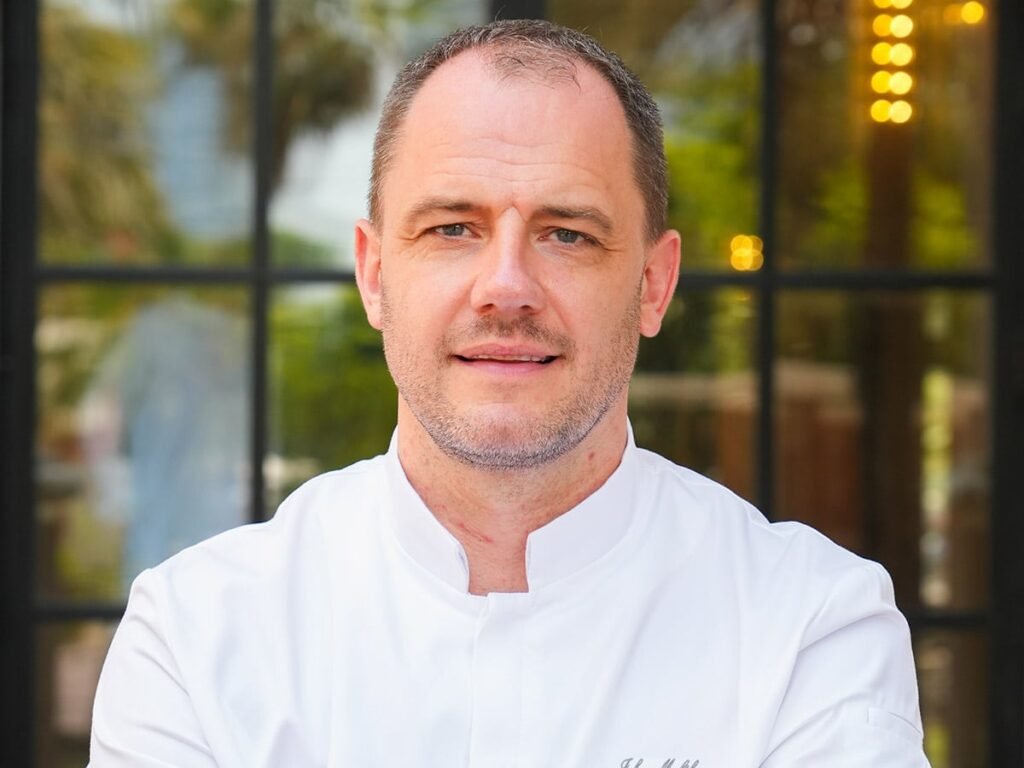
With more than two decades of experience across the UK, Ireland and the UAE, John Maltby has built his career around some of hospitality’s most demanding culinary operations. From luxury resorts and major hotel openings to large-scale kitchens serving thousands of guests, his experience has given him a broad perspective on what it takes to deliver consistent quality at scale.
Now appointed Complex Executive Chef at Destination Mina Seyahi in Dubai, Maltby oversees the culinary operations of W Dubai – Mina Seyahi, The Westin Dubai Mina Seyahi Beach Resort & Marina, and Le Méridien Mina Seyahi Beach Resort & Waterpark, covering more than 14 restaurants, bars and dining concepts as well as major banqueting and events operations.
In this conversation with Business Journal Media Group, Maltby discusses his approach to culinary leadership, the lessons learned from major hotel openings, the importance of kitchen efficiency, sustainability and waste reduction, and what it takes to maintain standards across a complex multi-property destination.
You are now overseeing the culinary operations of three major Dubai hotels and more than 14 dining concepts. What does this new role mean to you, and what are your priorities?
This role brings together many of the experiences I have gained throughout my career. Working across several properties and a wide range of dining concepts requires a clear focus on consistency, standards and communication.
One of my priorities is to strengthen the culinary standards across the destination while continuing to develop new ideas. At the same time, I want to look closely at how our kitchens operate every day, identifying opportunities to reduce waste, improve processes and increase efficiency without compromising food quality or the guest experience.
Managing such a large culinary operation requires both creativity and structure. How do you balance the two?
Creativity is essential to hospitality, but it needs to be supported by strong systems and processes. When you are operating at this scale, consistency becomes extremely important.
The goal is to give chefs and teams the freedom to develop ideas while ensuring that the foundations of the operation remain strong. Clear procedures, communication and training allow creativity to flourish without affecting the standards our guests expect.
You have been involved in major hotel openings, including W Edinburgh. What did that experience teach you about preparing a culinary operation from the ground up?
A hotel opening gives you the opportunity to build an operation from its foundations. At W Edinburgh, I was involved in everything from kitchen design and recruitment to procurement, operating procedures, menu development and team training.
It taught me that preparation is critical. Every detail needs to be considered before opening, but you also need to remain flexible because there will always be unexpected challenges. Building the right team is equally important because the people you bring together ultimately determine how the operation performs.
Before joining Destination Mina Seyahi, you worked at Atlantis The Royal, one of Dubai’s most complex culinary environments. What did you take from that experience?
Atlantis The Royal gave me valuable experience of working within a very large and diverse culinary operation. With approximately 450 chefs across 17 restaurants, including Michelin-recognised concepts, there was an enormous amount to learn.
It reinforced the importance of organization, communication and maintaining standards across different teams and concepts. It also showed me how important it is for leaders to remain connected to the operation and understand what is happening on the ground.
Sustainability and waste reduction are becoming increasingly important in professional kitchens. How are you approaching these areas at Mina Seyahi?
Waste reduction starts with understanding the operation in detail. We are looking closely at everyday processes and identifying where improvements can be made.
The objective is not simply to reduce waste, but to create more efficient ways of working while maintaining quality. Better planning, stronger processes and greater awareness across the team can make a significant difference over time.
You spent three years at Adare Manor in Ireland. How did that experience influence you as a chef and leader?
Adare Manor was a very important period in my career. I worked across eight outlets with a large culinary and stewarding team, and the property had a very strong culture around standards and attention to detail.
Working in an independently owned luxury resort gave me a different perspective on hospitality. It reinforced the importance of consistency, teamwork and creating an environment where people take genuine pride in what they do.
Your career began in Edinburgh when you were just 16. What originally drew you to cooking?
My interest in cooking started much earlier through baking with my grandmother. By the time I was in high school, cooking programmes had become something I really enjoyed watching.
When I started working at the Caledonian in Edinburgh at 16, I had the opportunity to experience different areas of the kitchen. While attending college, I trained across banqueting, all-day dining and fine dining, which gave me a strong foundation for the career that followed.
How important is team development to your approach as a culinary leader?
It is fundamental. A successful kitchen is never built around one person. It depends on a team that understands the standards, communicates effectively and has opportunities to develop.
My role is not only to maintain standards but also to help people grow. When you invest in your team and give people responsibility, they become more confident and engaged, and that ultimately benefits the entire operation.
What do you believe is the biggest challenge when managing multiple restaurants and dining concepts under one destination?
Maintaining consistency while allowing each concept to retain its own identity is one of the key challenges.
Every restaurant should have its own personality and guest experience, but the underlying approach to quality, professionalism and operational discipline needs to remain consistent. Strong communication between teams is essential to achieving that balance.
Looking ahead, what would you like to achieve at Destination Mina Seyahi?
I want to continue strengthening the culinary operation while identifying opportunities to improve efficiency, develop our teams and create new experiences for our guests.
There is a lot of potential across the destination. My focus will be on combining the experience of our people with strong operational processes, creativity and a constant commitment to quality.
By Salina Khuory